You need Massapequa roofers who know coastal conditions and extreme weather. Expect NYS-licensed, fully insured pros who manage paperwork, comply with NY standards, and keep detailed records. Your contractors will specify Class A, high-wind systems with stainless or hot-dip galvanized fasteners, ice barriers to 24 inches inside warm walls, and proper airflow management. Get itemized estimates, financing options, and 24/7 storm tarping. Rely on photo-backed reporting, meticulous cleanup, and registered warranties with maintenance plans-that's what quality service includes.
Essential Points
- Licensed and registered in New York's Nassau region and Oyster Bay Township, with all permits properly processed and code-compliant installations documented.
- Fully covered with insurance: General Liability, NYS workers' compensation, and disability insurance; insurance copyright-issued certificates including Additional Insured and Primary/Noncontributory policy endorsements.
- Waterfront-ready systems: hurricane-rated shingles or metal materials, corrosion-resistant fasteners, moisture barrier protection, and properly engineered ventilation for waterfront conditions.
- Detailed estimates with photos, comprehensive inspections, and manufacturer-aligned requirements to ensure 130-150 mph wind durability and full warranties.
- round-the-clock emergency tarping, with comprehensive debris removal, thorough final review, and verified local references and ratings available on Google, BBB, and manufacturer portals.
The Importance of Local Expertise for Massapequa Roofing
From seaside breezes to winter storm impacts, Massapequa's environmental conditions and regulations call for roofing choices grounded in local expertise. You require a contractor who understands waterfront wind conditions, winter weather patterns, and coastal degradation so building components and materials are specified correctly. Local experts utilize neighborhood knowledge to select weather-tested materials, stainless or hot-dip galvanized hardware, and winter protection systems at eaves and valleys that align with site exposure.
The timing of seasons matters significantly. Planning your tear-offs and installations is crucial to minimize adhesive issues from excessive moisture and cold-weather material brittleness, while ensuring seal strips properly activate within proper temperature parameters. A local expert arranges airflow upgrades, flashing details, and gutter pitch modifications before seasonal storms begin, focusing on effective ridge-to-soffit ventilation and weatherproof joints at chimneys, skylights, and dormers. You benefit from lasting performance specifically suited to Massapequa climate.
Professional Licensing, Insurance, and Code Compliance
We understand you need proper licensing, full coverage, and strict compliance with local building codes on every project. We verify contractor license numbers, maintain comprehensive liability and workers' compensation coverage, and ensure all permits and inspections are properly filed. You receive written verification, ensuring code compliance, your property remains secure, and potential risks are reduced.
Proper NYS Licensing
While roofing craftsmanship often takes center stage, maintaining proper NYS licensing, insurance, and adherence to codes is vital for safeguarding your home and financial interests. You should only work with specialists who possess an active New York State Home Improvement license and, where locally mandated, registration with the Town of Oyster Bay or Nassau County. Be sure to ask for license numbers and confirm them with the relevant licensing authority.
Verify that the supervising contractor is listed as the authorized individual on the license. Require contract validation that details the license details, work scope, and appropriate NYS Residential Code specifications. Confirm complete pull-and-close permits, final reviews, and manufacturer specifications are completed.
Select roofers who undergo continuing education to keep up with code updates, safety standards, and lawful practices. This careful approach helps avoid violations, stops stop-work orders, and makes certain your project satisfies compliance checks without delay.
Total Insurance Protection
Given that even the highest quality installation could experience unexpected problems, be sure to select a roofing professional who maintains full insurance: active general liability coverage with limits that match your property value, state-required workers' compensation coverage, and disability benefits protection for all workers on site. Make sure to obtain certificates of insurance straight from the insurance company, rather than photocopies or images, and verify active coverage periods and occurrence-based coverage. Don't forget to confirm Additional Insured provisions and Primary/Noncontributory endorsements including your name and property details.
Ask about the contractor deals with claim disputes and needs carriers to waive subrogation where appropriate. Verify completed-operations coverage for post-completion matters. Cross-check policy numbers with the New York State Workers' Compensation Board database. Require written notice for all cancellations during the project. Detail everything in your contract, including insurance certificates, policy endorsements, and copyright details.
Materials That Hold Up to Long Island Weather
Even with Long Island's difficult mix of salt air, freeze-thaw cycles, and strong nor'easter winds, the right roofing materials can offer long periods of steadfast performance when appropriately selected and installed. You'll require materials built for coastal exposure and certified to comply with New York State and local regulations.
Choose Class 4 impact resistant shingles to protect against hail and windborne debris, combined with corrosion-proof or hot-dipped galvanized fasteners. Select SBS-modified asphalt for outstanding expansion-contraction tolerance. Apply coastal grade sealants on all penetrations and perimeters to combat salt crystallization and UV damage. Install ice and water barrier from the roof edge to at least 24 inches inside the warm wall. Include a mechanically attached, high-wind underlayment, securely sealed seams, and ridge vents balanced with soffit intake. Check manufacturer wind warranties reaching 130-150 mph.
Clear Pricing and Payment Solutions
You've seen how quality materials meet Long Island's coastal conditions; now we break down the finances clearly. You get an comprehensive list that details labor, materials by manufacturer, underlayment type, ventilation components, disposal, permits, and warranty options. We tie each item to regulatory specifications so you can confirm the project against Nassau County codes and manufacturer standards.
To help keep your project within budget, we extend flexible financing options with set-rate options and clear terms. Through our trusted credit providers, you may choose interest-free periods or competitive-rate solutions with no prepayment penalties. We frequently publish seasonal deals that reduce costs on construction materials, weather protection, or attic systems. Before any work begins, you validate the agreement, project milestones, and payment schedule, ensuring complete control over expenses, timing, and project scope.
Emergency Response for Storm Damage
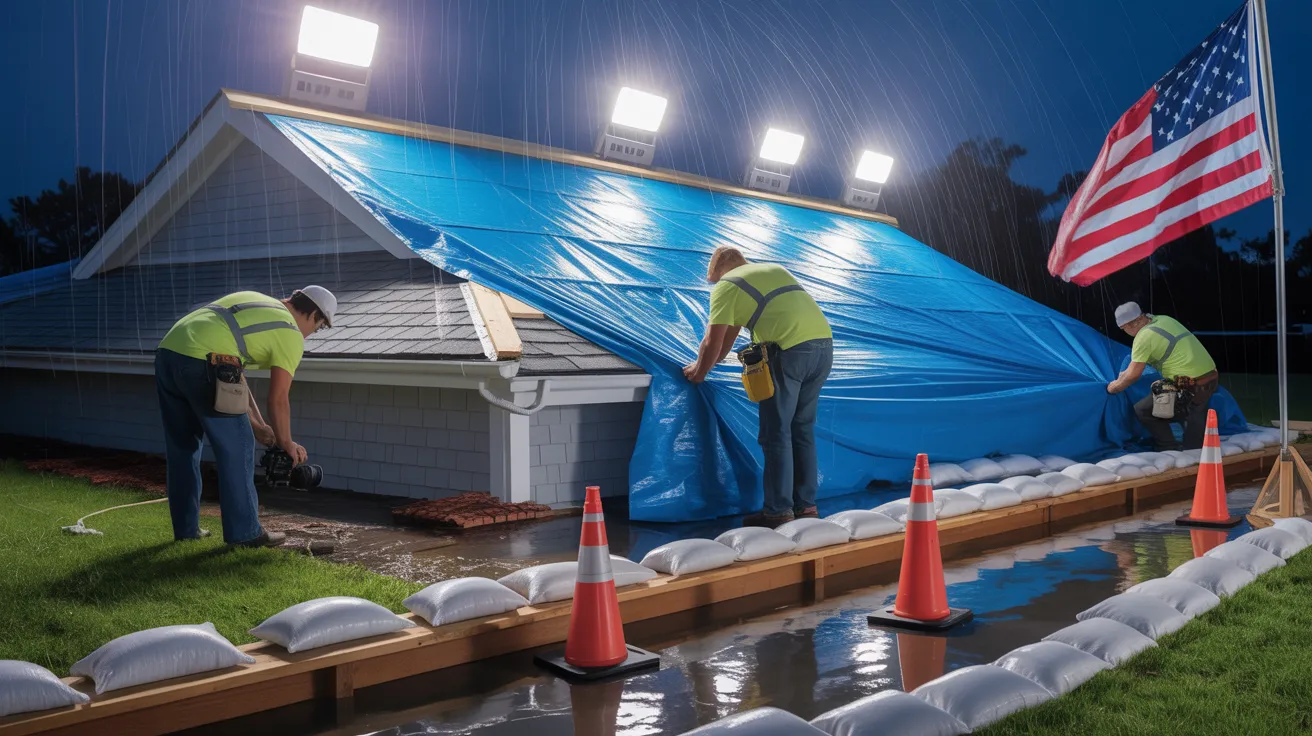
After your roof sustains damage from severe weather or fallen limbs, our certified emergency team responds 24/7 to secure the structure. We quickly arrive to evaluate risks, document conditions, and ensure utility safety. We then install temporary protective tarps and emergency boarding to prevent water damage, ensuring compliance with insurance protocols.
Our technicians comply with local code and manufacturer specs for fasteners, underlayment, and flashing. We protect vulnerable areas, stabilize damaged roofing, and clear away waste to maintain accessibility. When structural issues arise, we implement support measures and contain problem zones. We deliver a comprehensive solution, installation details, and water damage assessments, to help guide your choices. We collaborate with claims specialists, prioritize life-safety, and follow up quickly to verify that the envelope remains watertight.
The Complete Guide to Roof Replacement: From Inspection to Cleanup
The process begins with a thorough roof assessment that records deck condition, ventilation systems, flashing components, and regulatory requirements. After that, you plan product options - including shingles or metal options, underlayment grades, fastening systems, and complementary materials - matched to wind ratings, warranty terms, and local codes. Lastly, the team provides a tidy job site and a documented final walkthrough that validates quality, finalizes permits, and ensures all items are addressed.
In-Depth Roof Inspection
Prior to starting, a comprehensive roof inspection sets the foundation for a regulation-adhering replacement project. You receive a methodical review of structural integrity, airflow systems, and moisture barriers to ensure the work scope is precise and meets local regulations.
We carefully document roofing system indicators, missing or damaged shingle tabs, and shingle deterioration along eaves and within gutters. From within, we evaluate decking deflection, anchor point concerns, and moisture indicators suggesting ventilation or flashing issues. System penetrations - including chimneys, skylights, and vents - are inspected for proper flashing condition and sealant durability. We investigate weak spots, evaluate water flow, and verify appropriate positioning of underlayment, ice barriers, and drip edge in necessary areas.
You'll get a photo-supported assessment highlighting necessary repairs, structural concerns, permit requirements, and priority defects, enabling a thorough, regulation-adherent improvement program.
Planning Material Selection
While aesthetics are important, material choices start with climate zones and local regulations. You'll need to align selections with Massapequa's weather and safety standards, as well as local energy requirements. We meticulously verify the deck's status and weight limitations, prior to choosing assemblies that perform within those parameters. For seaside installations, you'll want to focus on maximum fire protection, high wind uplift resistance, and weather-resistant attachments.
You'll start by picking a roofing material: asphalt shingles for affordability and widespread use; metal for extended lifespan; or synthetic slate for its lightweight properties. When exploring green roofs, we'll ensure structural specifications, root protection, and drainage systems meet local codes. For solar shingle installations, we manage electrical requirements, flashing details, and fire safety requirements to ensure a watertight barrier. You'll finish by picking suitable underlayment, ice protection barriers, and ventilation components to finalize a code-compliant, durable specification.
Final Walkthrough and Cleanup Process
As soon as the team finishes the last nail, cleanup begins right away and proceeds according to a defined checklist. Workers examine the entire project area, gather and contain waste, and sort recyclable materials. Magnetic sweepers carefully check the perimeter and lawn to collect any stray nails. Disposal bins are tarped and transported according to local ordinances. We capture images of cleanup areas for waste disposal documentation and ensure that drainage systems, ventilation, and roof openings are clear. Safety apparatus and safety lines are dismantled last to stop new debris.
After that, we conduct a final construction inspection. We examine all flashing details, fastener placement, sealant applications, and drip edges to validate they match code and manufacturer specifications. We inspect roof ventilation, verify proper intake and exhaust ratios, and validate warranty activation. We'll provide maintenance documentation and a completion checklist where required. Final payment isn't requested until you approve completion.
Home Insulation, Ventilation, and Energy Performance Improvements
Properly balancing airflow and insulation is essential for a roof system that performs efficiently year-round. Your home stays website protected when you combine building code-approved ventilation with complete thermal protection. We size intake and exhaust to meet net free vent area requirements, avoid ice dam formation, and eliminate humidity that reduces structural materials and thermal performance.
We evaluate different ventilation approaches prior to sealing gaps around lighting fixtures, chimney penetrations, and other openings to minimize escape of treated air. We place baffles to ensure unobstructed eaves, preserve ventilation pathways, and confirm moisture barrier positioning for your climate zone. Dense-packed or blown-in insulation upgrades are configured to meet specific R-values keeping air passages clear. Heat-reflective shingles, radiation barriers, and intelligent thermal venting lower peak energy usage, optimize living space comfort, and decrease monthly energy expenses.
Understanding Warranties, Service Plans, and Lasting Value
Prior to starting the installation, we outline warranties and maintenance schedules to ensure your roof provides consistent performance and value throughout its lifetime. You'll have clear information about coverage details, coverage periods, and what qualifies for service, for both materials and labor. We take care of registration, document every installation detail, and align all parameters to maintain Extended warranty validity.
We combine coverage with a service program customized for Massapequa's coastal exposure. Regular inspections each spring and fall check flashing performance, sealant status, shingle bonding, and penetrations. We clear accumulated materials, calibrate attic ventilation, and capture photos for your documentation. Immediate repairs keep minor issues from voiding protection.
This systematic method reduces life-cycle costs, stabilizes budgeting, and preserves resale value. You achieve predictable ownership, minimal unforeseen problems, and a roof that complies with standards throughout its service life.
How to Assess Reviews and Find the Ideal Roofing Team
With warranties and maintenance planned out, the next important step is finding a service provider who will maintain that coverage. Initially examining genuine feedback: cross-reference reviews across multiple review sites including Google, BBB, and manufacturer databases. Search for detailed project information, completion dates, and visual documentation; be wary of non-specific compliments or duplicate wording which often signals artificial feedback. Emphasize customer testimonials that mention regulatory compliance, proper permits, and inspections. Assess communication patterns-reputable contractors quickly handle concerns and maintain records of fixes.
Check and verify licenses, insurance documentation, and OSHA certifications; request official certificates transmitted directly from insurance providers. Reach out to local references and speak with them; verify beginning and end dates, modification requests, and site cleanup practices. Match quoted prices to scope requirements: ensure detailed itemization of materials, ventilation, flashing, and warranty coverage. Obtain written craftsmanship warranties and ensure manufacturer warranty registration. In conclusion, choose contractors with current manufacturer credentials and a comprehensive safety protocol.
Key Questions
Can You Partner With Solar Installers for Joint Roof-Solar Projects?
Absolutely, you can. You coordinate directly with solar installers to provide integrated roof-and-solar projects. You oversee solar coordination early, confirm loads, flashings, penetrations, and attachment layouts, and align system sequencing with roofing phases. You examine plans for code compliance, schedule crane/lift access, and ensure watertight detailing. You provide as-built documentation, warranty alignment, and final inspections. You also coordinate utility, inverter placement, conduit paths, and grounding/bonding requirements for a seamless installation.
Are Drone Inspections Available for Difficult-to-Access or Complex Roofs?
Absolutely, we offer drone assessments for hard-to-reach or complex roofs. Think of a bird's eye view of your property - your roof appears as a detailed landscape, each component meticulously recorded. FAA-licensed technicians adhere to flight regulations, obtain 4K imagery, and utilize thermal imaging to reveal hidden moisture, heat loss, and failing flashing. You get a regulation-compliant report, marked photos, and organized repair recommendations. We record clearances, copyright safety per FAA guidelines, and schedule around weather conditions to guarantee precise, safe results.
What's Your Approach to HOA and Architectural Review Requirements?
We provide full support throughout the HOA process from consultation to final approval. You'll receive compliant specifications, color samples, and documentation matching local requirements and community standards. We take care of all applications, oversee architectural review submissions, and address board feedback efficiently. Furthermore, we navigate municipal permits in parallel, guaranteeing timelines stay on track. Once you approve the package, we file the documentation, track status, and send updates until approval is received, then coordinate work in accordance with HOA and municipal specifications.
Can You Help With Skylight Installation or Replacement During Re-Roofing?
We specialize in skylight additions and upgrades during re-roofing projects. You'll get a detailed code-compliant specification outlining skylight dimensions, curb height, and roof load specifications. We carefully verify roof pitch requirements, flashing assembly, and ice/water shield integration. You can select fixed or vented skylights; we offer recommendations on glass treatments for effective UV control, solar heat gain, and energy performance. We handle all required permits, manufacturer requirements, and inspections, guaranteeing optimal watertight functionality, warranty coverage, and pristine interior appearances.
How Do You Handle Pets During Roof Construction Noise?
Animal wellbeing is paramount. We provide comprehensive planning, peaceful construction windows, and early updates allowing you to organize pet boarding or create noise-reduced rooms. We safeguard all entry points, seal vents, and control construction debris to prevent accidents. Work teams coordinate noisy tasks when you're away, post warning signs, and keep work areas tidy and regulated. You'll have one point person for project updates, as well as recommendations on organizing pet areas, noise reduction, and temporary adjustments.
Final Thoughts
Your home needs a roof that stays reliable in any climate. When you work with a Massapequa crew with regional expertise, valid credentials, and complete insurance, you prevent "inconveniences" before they become issues. You'll get resilient materials for Long Island's weather patterns, transparent numbers, and accommodating financing, plus swift attention when weather misbehaves. From detailed inspections to clean goodbyes, ventilation upgrades, and warranties that don't blush under scrutiny, you're investing in reliable, professional workmanship - and a home that keeps its dignity.